
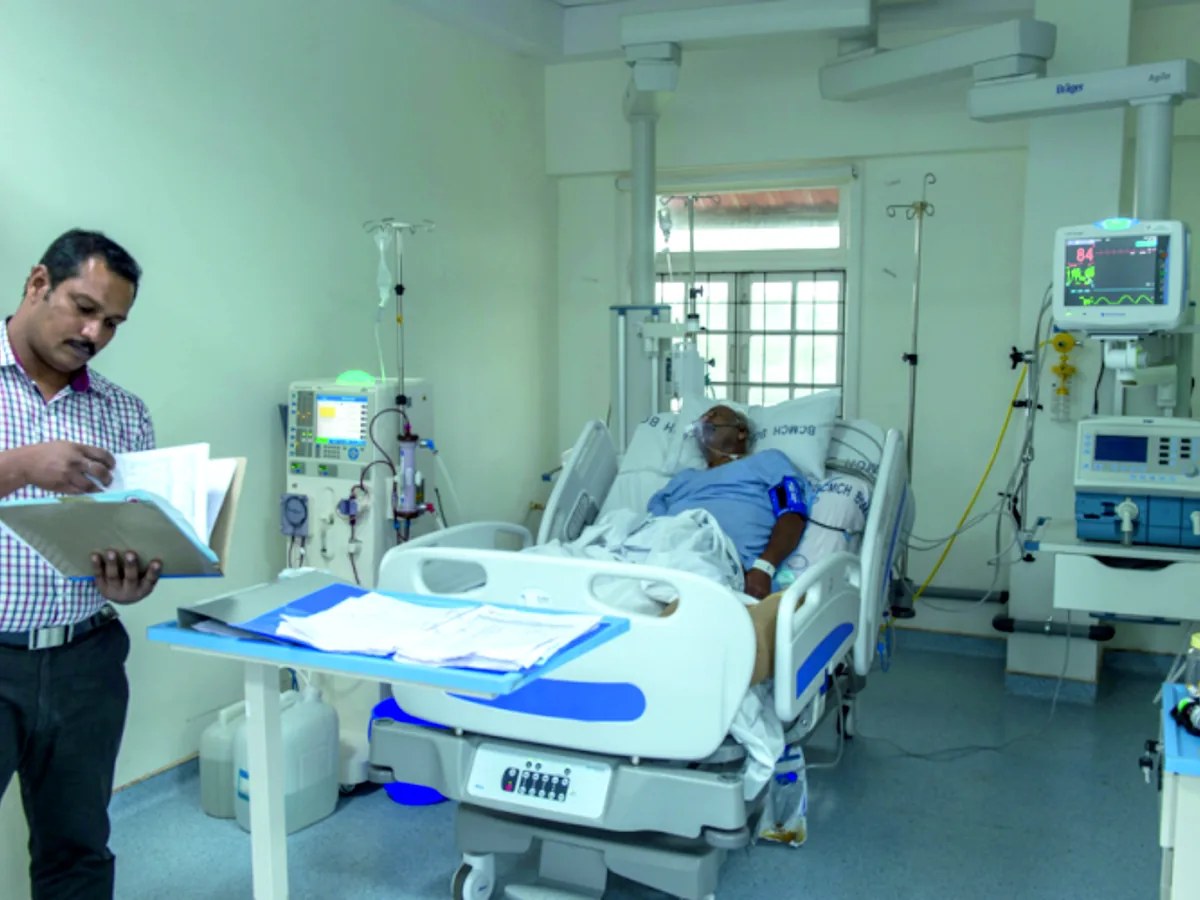
Intensive care is where patients go when they need continuous monitoring and support. The unit sits alongside accident and emergency and the coronary intensive care unit, and the anaesthesiology department covers both theatre and critical care.
What this department treats
Patients reach intensive care either through the emergency department or after surgery, and the decision is made by the treating team.
- Patients needing continuous monitoring
- Post-operative patients under observation
- Severe infection and sepsis
- Respiratory failure
- Cardiac patients needing close monitoring
- Stroke and neurological patients
- Multi-organ support
- Patients transferred from the ward
Inside the department
Intensive Care Unit
Continuous monitoring and organ support.
Intensive Coronary Care
Cardiac monitoring for heart attack and unstable cardiac patients.
Anaesthesiology
Covers both theatre and critical care.
24-hour diagnostics
Laboratory and imaging in the same building.
Getting seen
- Start at the general OPD. Between 9:00 am and 9:00 pm, pay the consultation charge and you will be seen and directed here. That charge includes the medicine prescribed for that day. In an emergency go straight to accident and emergency instead.
- Bring what you have. Photo identification, any scheme or insurance card, and earlier prescriptions, scans or reports.
- Scheme check before admission. Cards are verified before admission rather than at discharge.
- Rates are published. The same rate applies to every patient in a category, with no negotiation at the counter.